
Your organic waste: a profit centre, not a cost centre.
Turn food waste, manure and other residues into your own energy and valuable fertiliser, right where they arise.
Today you pay to get rid of your organic waste. A Bert biogas plant turns it into cooking gas, electricity, heat and fertiliser. Modular, proven in more than 140 plants, and sold, built and serviced by a local Bert partner near you. In the near future, we plan to use humanoid robots as plant operators. Watch our robot video
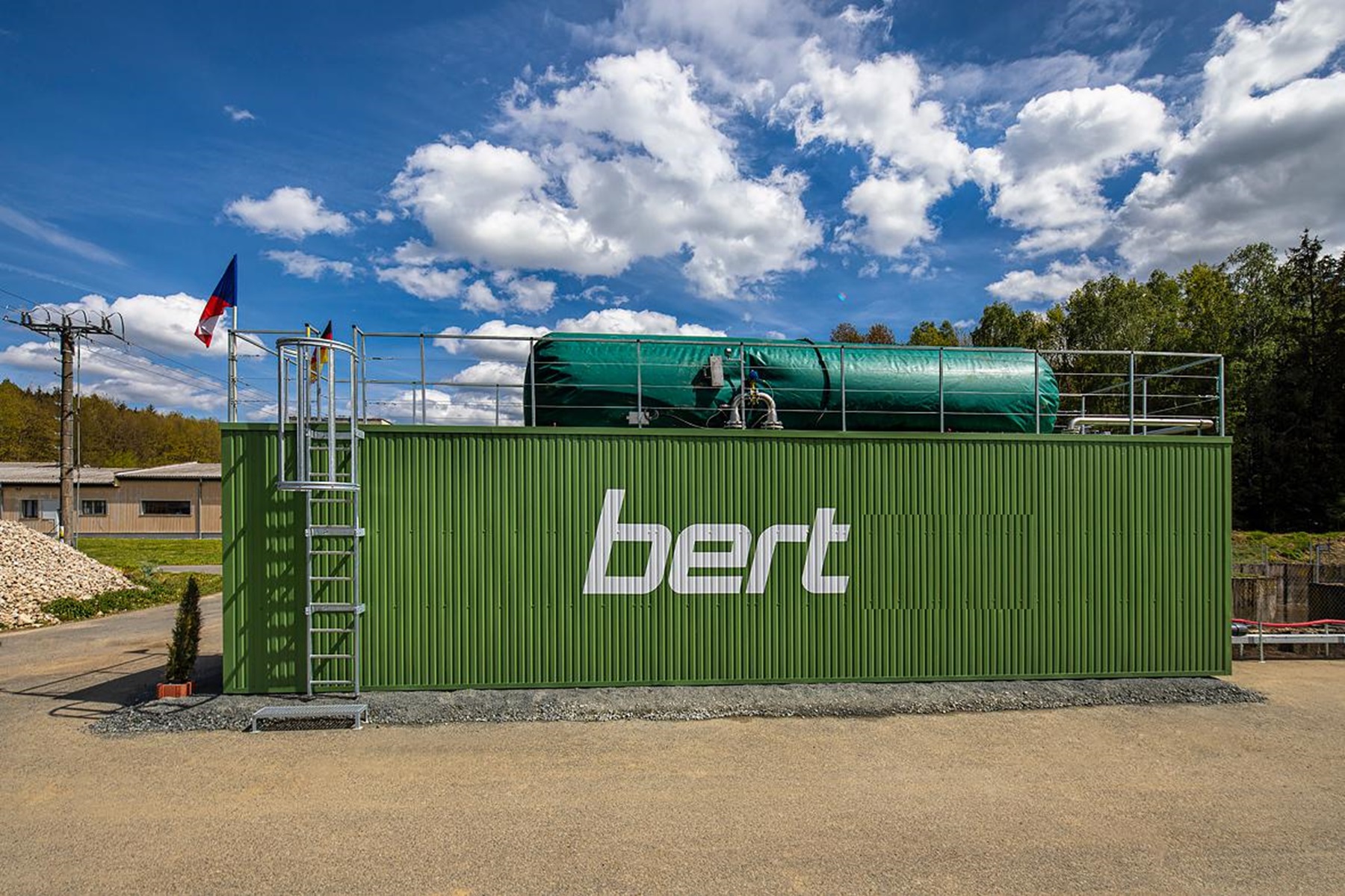
Waste costs money. Biogas turns it into value.
Every day, kitchens, farms and food factories pay to store, transport and dispose of organic waste. A biogas plant uses this waste on site, so the waste starts to earn money instead of costing it.
Your own energy
Biogas replaces LPG for cooking, or produces electricity and heat. You buy less energy and depend less on rising prices.
Lower disposal costs
Your waste is used where it arises instead of being trucked away. Fewer collections, lower fees.
Free fertiliser
What remains after digestion is a nutrient-rich fertiliser for your fields, or a product you can sell.
Clean and green
The waste goes into a closed, odour-free fermenter. Less smell, fewer flies, lower greenhouse gas emissions.
Biogas in plain words: when bacteria break down organic material without air, much like in a cow's stomach, they produce biogas. Its main part is methane, the same energy carrier as in natural gas. 1 m³ of biogas (about 60 % methane) replaces about 0.45 kg of LPG (cooking gas) or produces about 1.8 kWh of electricity in a small CHP unit.
Made for everyone who produces organic waste.
Hotels, restaurants & kitchens
Food and kitchen waste becomes cooking gas for your own kitchen.
Farms
Cattle, pig and poultry manure and slurry, straw and grass become electricity, heat and fertiliser.
Food & drink industry
Breweries, dairies, bakeries, slaughterhouses and food processors use their residues instead of paying for disposal.
Campuses & institutions
Universities, canteens, hospitals and military camps turn their daily food waste into energy.
Municipalities & sewage plants
Market waste, municipal organics and sewage sludge are treated locally and produce energy.
Islands & off-grid sites
Where energy is expensive and waste is hard to remove, biogas solves both problems at once.
What is your waste worth?
Choose your type of waste, enter how much you have per day and your local energy prices, and see the value in your own currency. Every type of waste gives a different amount of gas.
What can your substrate produce?
Choose a substrate and the daily amount for a quick first estimate of biogas, LPG equivalent and electricity. Add your local prices to see what your waste is worth in your currency.
Your values for your waste
Enter your local prices to see the value of your waste. LPG and electricity are alternative uses of the same biogas, so the two values are not added up. Values per year are based on 8,600 operating hours. Neutral standard reference values for a first orientation, from a European substrate database; values in Asia, Africa or South America can differ. Energy is calculated from the methane content of each substrate. For a project-specific calculation, ask Bert or contact us.
This is just a first glance of the value you have from your waste, but there are many other waste income streams.
Interested in your own project? Fill in the short RFQ template and send it to us. We will prepare a proposal for your site.
Terms explained
| m³ biogas | The amount of gas your plant produces, measured in cubic metres. 1 m³ (about 60 % methane) replaces about 0.45 kg of LPG. |
|---|---|
| LPG equivalent | How much bottled cooking gas (LPG) the biogas can replace. |
| kWh | Kilowatt-hour, the unit on your electricity bill. 1 m³ of biogas (about 60 % methane) gives about 1.8 kWh of electricity in a small CHP unit. |
| kW continuous output | The electrical power the plant delivers around the clock, for example to run machines or cooling. |
| Methane (CH₄) | The part of biogas that carries the energy, usually 50–65 %. More methane means more energy per m³. |
| oDM (organic dry matter) | The part of the dry matter that bacteria can turn into gas. |
| DM (dry matter) | The share of the waste that is not water. Drier waste usually gives more gas per tonne. |
| Digestate | What remains after the gas is produced: a liquid and solid fertiliser. |
Every substrate has a different gas yield
Approx. m³ biogas per tonne of fresh matter · DM = dry matter · right: ≈ kW electrical continuous output at 1 t/day. Click a substrate to use it in the calculator.
Show values as a table
| Substrate | Dry matter (DM) | Methane (CH₄) | m³ biogas per t | ≈ kW el. at 1 t/day |
|---|---|---|---|---|
| Frying fat, hardened | 95 % | 68 % | 826 | 70 |
| Bakery waste | 88 % | 60 % | 677 | 51 |
| Wheat straw | 86 % | 51 % | 293 | 19 |
| Maize silage | 32 % | 53 % | 200 | 13 |
| Slaughterhouse waste | 25 % | 65 % | 185 | 15 |
| Grass silage | 28.3 % | 52.9 % | 158 | 10 |
| Blood, liquid | 18 % | 70 % | 118 | 10 |
| Brewer's spent grain | 25 % | 60 % | 116 | 9 |
| Chicken manure | 32 % | 60 % | 112 | 8 |
| Food waste | 16 % | 60 % | 95 | 7 |
| Kitchen waste | 14 % | 60 % | 72 | 5 |
| Cow dung | 21.8 % | 53.2 % | 60 | 4 |
| Whey, fresh | 5 % | 53 % | 34 | 2 |
| Cattle slurry | 8.5 % | 58 % | 24 | 2 |
| Pig slurry | 4.7 % | 60.8 % | 15 | 1 |
| Sewage sludge | 4 % | 60 % | 15 | 1 |
1 tonne of substrate per day yields approx. 1 kW to 70 kW of continuous electrical power. Substrates and substrate mixtures are the key factor for energy output and payback period. Not all substrates can be mixed or used 100 % alone.
Neutral standard reference values from a European substrate database; values in other regions of the world can differ. Actual yields vary with substrate quality, organic DM content and retention time. kW el. based on the methane content of each substrate, 9.97 kWh/m³ methane and 30 % CHP efficiency (small CHP units).
An investment that pays back.
How fast a plant pays for itself depends above all on your waste, the daily amount and your local prices for energy, fertiliser and disposal. That is why we calculate every project individually, with your own figures.
Where the money comes from
Energy you no longer buy
LPG, diesel, electricity or heat that your plant now produces itself.
Disposal you no longer pay
Collection, transport and landfill or treatment fees for your organic waste.
Fertiliser
Liquid and solid fertiliser for your own use or for sale.
Extra income
Selling electricity or BioCNG and, for suitable projects, carbon credits.
Leasing makes it affordable. Bert plants are leasable, with terms of up to five years and a ten-year warranty on the fermenter. Your local Bert partner helps you to access local leasing options.
How much work is it? Your team fills the reception pit once a day. From there, a pump feeds the fermenter automatically every hour, and the biogas process runs continuously. Your local Bert partner installs and commissions the plant, trains your staff and provides service and maintenance on site.
Biogas technology you will not find anywhere else.
Bert does not simply sell a digester. Bert turns organic residues that are hardly used today into economic value, right where they arise, with technology developed from decades of experience in anaerobic digestion.
Bert Panel Fermenter
Built from standardised panels: compact to transport, quick to assemble and sized exactly to your amount of waste, with a small footprint.
Mira Carbon
A carrier material inside the fermenter on which the gas-producing bacteria settle as a biofilm. Proven for decades in wastewater treatment, it gets more biogas out of the same waste.
Robot-supported assembly
A robot helps unload and assemble the panels. This makes construction fast, precise and repeatable in every market.
Industrialised construction meets robotic innovation.
The Bert Panel Fermenter is built from standardised panels. A robot helps with unloading and assembly. Click either image to play the original footage.
Transport & unloading
The robot receives and handles the panel components.
Assembly
Panel-by-panel installation for fast, repeatable construction.
Operation and maintenance support by robot is a future development and not yet part of current plants.
Built on experience. Proven in operation.
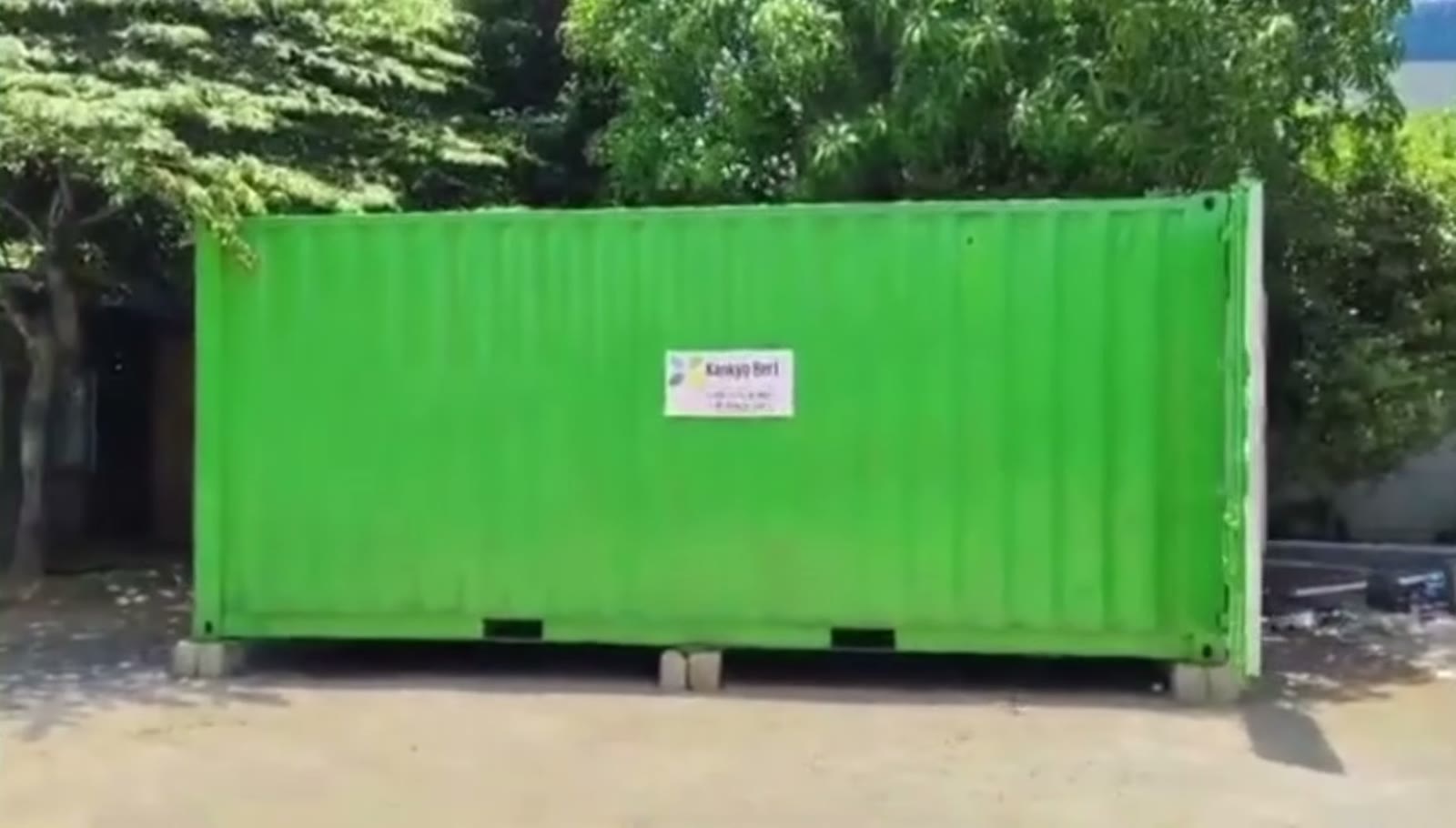
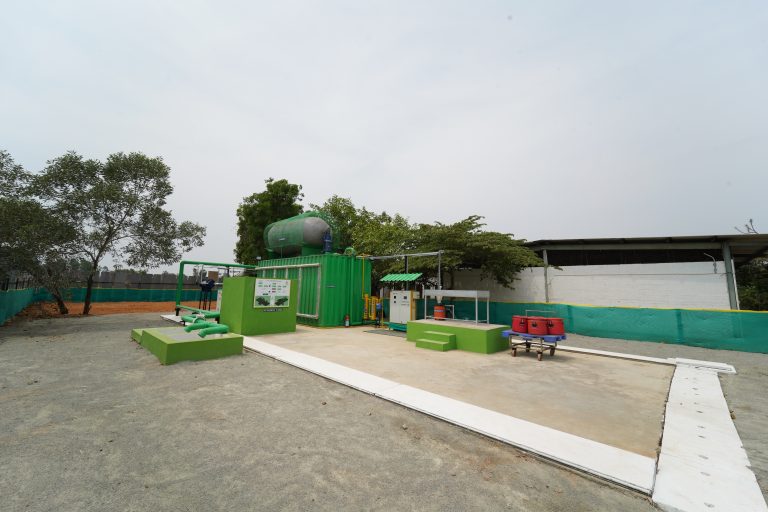
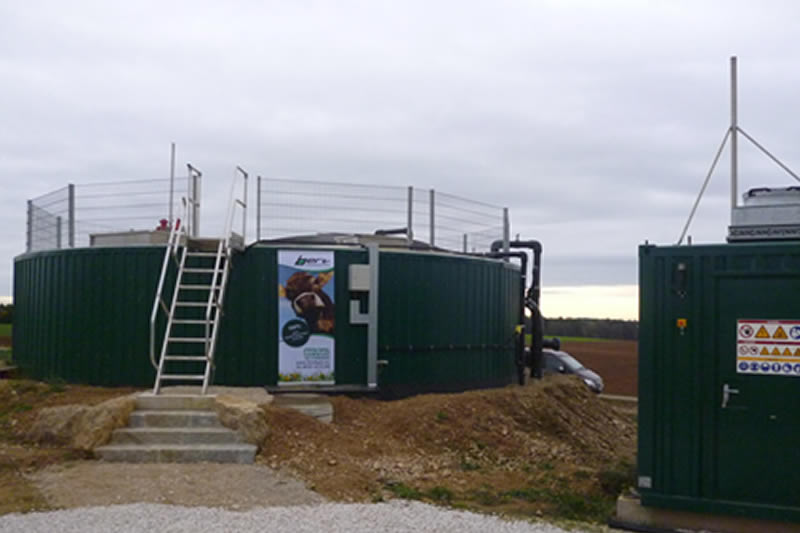
From organic waste to renewable energy.
Substrates move through pretreatment, anaerobic digestion and gas treatment into energy use, while digestate becomes a second value stream.
What biogas can do
How household waste, manure and sewage sludge become renewable gas, energy and fertiliser, explained in under 90 seconds.

Inside a Bert plant
Feed tank, digester, gas storage, gas cleaning, energy use and digestate separation in one compact layout. Click to enlarge.
One renewable energy source. Many possibilities.
Biogas can be matched with different local applications. The right energy concept depends on demand, infrastructure and economics.
Continuous production needs smart utilisation
Illustrative day profile: a biogas plant produces steadily around the clock, while energy demand changes. Hover for hourly values.
Because large gas storage is usually uneconomic, Bert designs the energy concept around continuous use: combining consumers such as CHP, cooking, cooling and fuel so that the gas is used when it is produced.
Valuable fertiliser. Not just a by-product.
Digestate is the second output of the biogas process and a value stream in its own right. Further nutrient recovery can create additional value.
Liquid fertiliser
Liquid digestate delivers nutrients for agricultural use, depending on quality and local requirements.
Solid fertiliser
Separated solids can be used in organic fertiliser and soil-improvement concepts.

MiraX biogas plants in seven sizes.
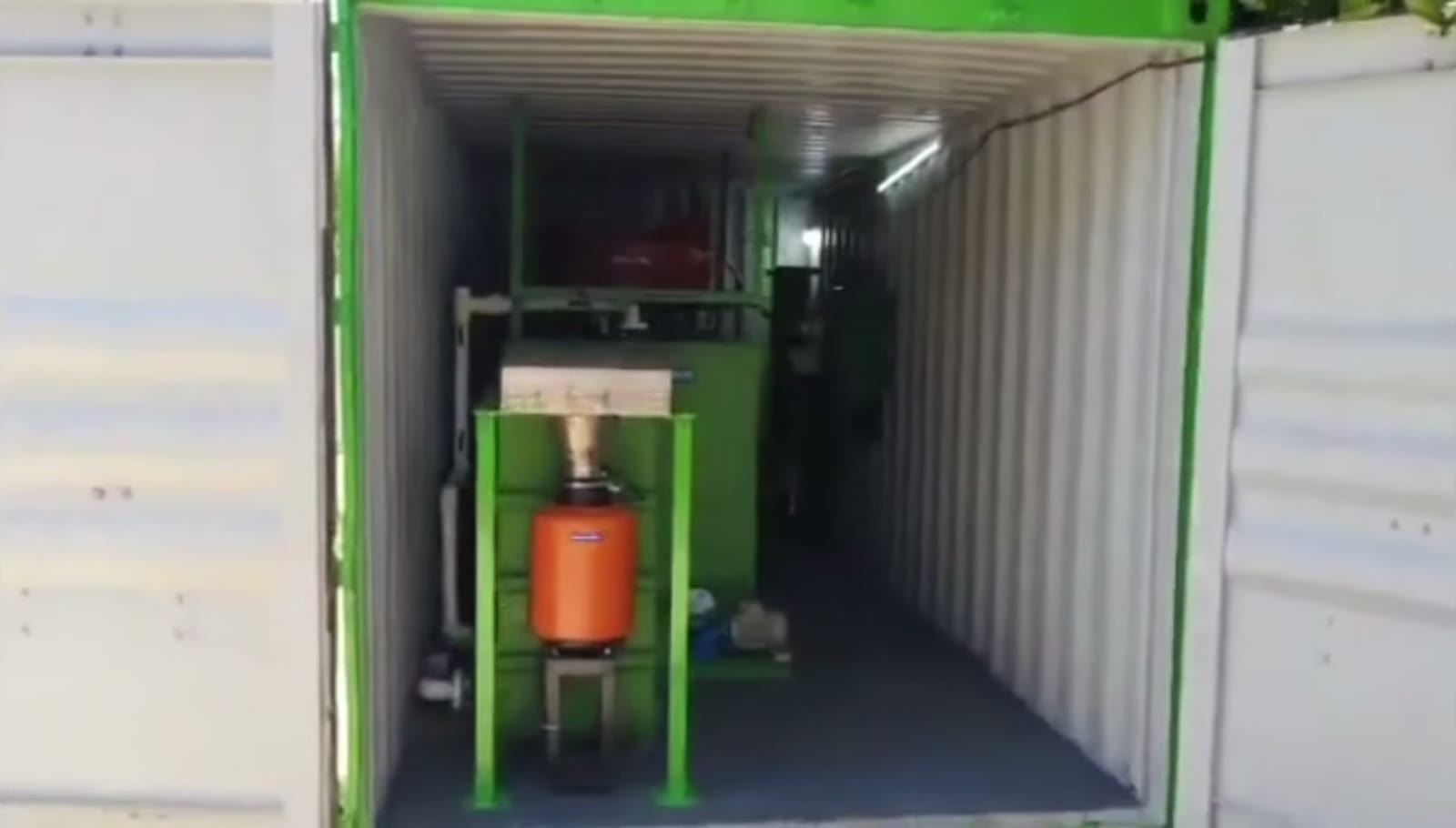
Compact, modular plants from 200 kg to 6 tonnes of waste a day, and larger Bert plants for farms, industry and municipalities. Your quotation comes from your local Bert partner, complete with transport, installation and commissioning.
Open the model sheet in the zoom viewer to read the technical figures and indicative prices (zoom with the mouse wheel or the + button, drag to move), or download a copy.
Key figures as text
| Model | Food waste kg/day | Biogas m³/day | LPG equivalent kg/day | Indicative price (USD) |
|---|---|---|---|---|
| MiraX 200 | 200 | 16 | 7 | 31,000 – 48,700 |
| MiraX 500 | 500 | 40 | 18 | 44,700 – 64,000 |
| MiraX 1000 | 1,000 | 80 | 36 | 54,000 – 94,500 |
| MiraX 2000 | 2,000 | 160 | 72 | 116,400 – 180,000 |
| MiraX 3000 | 3,000 | 240 | 108 | 140,600 – 204,000 |
| MiraX 4000 | 4,000 | 320 | 144 | 168,000 – 250,000 |
| MiraX 6000 | 6,000 | 480 | 216 | 230,600 – 454,500 |

Four steps to your own biogas plant.
Tell us about your waste
Type of waste, amount per day and location: use the short form or the RFQ template.
Check and calculation
We check your waste and calculate gas, energy, fertiliser and payback for your site.
Proposal from your local partner
A complete offer including transport, installation and permits, for purchase, leasing or service models.
Build, start, operate
Your partner installs and commissions the plant, trains your team and provides service on site.
Become a Bert franchise partner.
Bert sells and builds its plants through local partners in every market. If you want to build a biogas business in your country, Bert gives you the technology, the brand, training and engineering support from Germany.
The people behind Bert Energy.
Bert Energy · Germany
 Thomas Dory
 Dr. Rolf WitteManaging Director · CFO Kankyo Bert
Kankyo Bert · Chennai, India
 Dev AnandManaging Director
 Sathya PrabhuCEO
 Sriram ChellappaDirector
 Tanmayee PanigrahiGM Technical and Business
 UR RaoChief Advisor
Our partners
Bert plants are sold, built and serviced by local partners who know their market, its rules and its language.

Kankyo Bert Pvt Ltd
India · Chennai
Joint venture of Bert Energy and Kankyo Cleantech India. Builds MiraX plants and runs the demo and training plant at Crescent University, Chennai.

G-Gas Modular s.r.o.
Czech Republic · Prague
Bert partner for the Czech Republic.
Website coming soon. Contact: info@bert-energy.com
Bert works with partners in further countries. Looking for a partner near you? Write to info@bert-energy.com.
What could your organic waste become?
Tell us what waste you have, how much per day and where, and we will get back to you. For a detailed quotation, download the RFQ form, fill it in and send it to us.
Quick question? The Bert Biogas Assistant answers from our knowledge base and forwards anything open to our team.
MiraX template: small, modular container systems. Large plants template: bigger Bert plants for farms, industry and municipalities.